 PermaTherm Pete September 1, 2026
If you are planning a cold storage construction project, insulated metal panels are the single most important material decision you will make. The right panel system determines whether your facility holds temperature, controls energy costs, and passes inspection on the first try.
PermaTherm manufactures American-made polyisocyanurate (PolyIso) insulated metal panels for temperature-controlled environments, including cold storage warehouses, walk-in coolers, freezers, food processing plants, and pharmaceutical storage facilities. For cold storage applications, the current PermaTherm panel to reference is the PHF43 / PHF hidden fastener panel, paired with PermaTherm’s PermaShield™ technology to support a tight thermal and moisture barrier at panel connections.
This guide covers what to know before specifying cold storage insulated metal panels for your next project.
PolyIso foam core delivers approximately R-8 per inch, making it a thermally efficient core 8.2 material for cold storage panels.
| Panel Thickness |
Approx. R-Value |
Temperature Range |
Common Applications |
|---|---|---|---|
| 4″ | R-32,32.8 | 35°F to 55°F | Walk-in coolers, produce storage, loading docks |
| 5″ | R-40,41 | 28°F to 40°F | Commercial refrigeration, dairy storage, floral coolers |
| 6″ | R-48, 49.2 | 0°F to 32°F | Freezer warehouses, ice cream storage, food processing |
| 8″ | R-64, 65.6 | -20°F and below | Deep-freeze cold storage, blast freezers, pharmaceutical storage |
Why R-value matters for cold storage: R-value measures thermal resistance. Higher R-value means less heat transfer through the panel. In cold storage construction, insufficient R-value can lead to condensation buildup, ice formation on interior walls, compressor overwork, and higher energy bills. Choosing the correct R-value for your target temperature is the foundation of cold storage energy efficiency.

Insulated metal panels are prefabricated building envelope components made of two metal facings bonded to a rigid insulation core. In cold storage applications, PermaTherm focuses on polyisocyanurate (PolyIso) foam core panels because they deliver strong thermal performance in a compact panel thickness.
Unlike traditional wall assemblies that require separate framing, insulation, and vapor barrier materials, cold storage insulated metal panels combine multiple envelope functions into a single component. This reduces installation time and creates a continuous insulation layer around the facility.
Key advantages of IMPs over conventional cold storage insulation:
The R-value you need depends on the interior temperature your facility must maintain. Cold storage insulation requirements increase as target temperatures drop.
Define your target interior temperature. Walk-in coolers holding produce at 38°F have different panel requirements than blast freezers operating at -20°F.
Factor in your climate zone. A cold storage warehouse in Phoenix faces different exterior heat loads than one in Minnesota. Higher exterior temperatures create more thermal stress on the panel assembly.
Review energy cost impact. Under-specifying R-value by even one thickness increment can increase annual refrigeration costs by 15–25%. The upfront savings on thinner panels rarely justify the long-term energy penalty.
Account for future use. If there is any possibility the facility will store products requiring colder temperatures in the future, consider the higher R-value during the initial specification. Retrofitting cold storage panels is significantly more expensive than specifying them correctly the first time.
General guidelines:
For a detailed breakdown of how R-value is calculated and what affects it, read R-Value in Insulated Metal Panels on the PermaTherm blog.
The connection between panels is one of the most important details in any cold storage envelope. If the connection allows air infiltration or thermal bridging, the wall system can underperform regardless of the panel’s R-value.
PermaTherm’s PHF43 / PHF hidden fastener panel is the current panel reference for cold storage applications. The hidden fastener design uses concealed attachment to create a clean, durable surface without exposed fastener heads across the panel face.
This matters in cold storage because smoother wall and ceiling surfaces are easier to clean, easier to inspect, and less likely to create unnecessary interruption points in temperature-controlled environments.
Best for: Cold storage warehouses, freezers, walk-in coolers, food processing facilities, pharmaceutical storage, and projects where cleanable surfaces and dependable thermal performance are priorities.
The performance of a cold storage panel system begins at the panel connection. PermaTherm’s PermaShield™ technology supports a continuous thermal and moisture barrier at the panel-to-panel connection point, helping reduce the thermal bridging and air movement that can undermine cold storage performance.
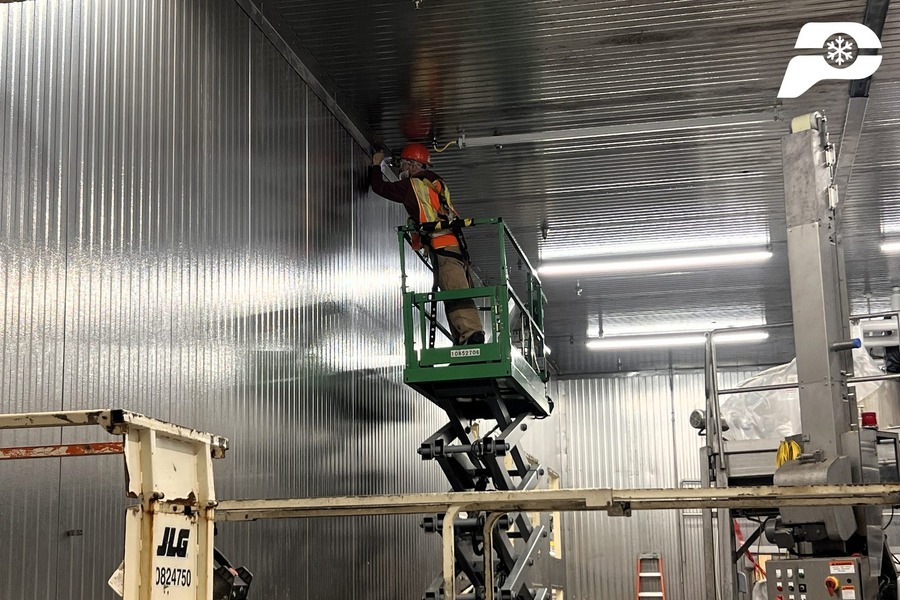
Proper installation is just as important as panel selection. Even premium cold storage panels will underperform if installed incorrectly.
PermaTherm panels can arrive factory-notched to project specifications using the PRISM™ quoting and takeoff system. This reduces field cutting, limits waste, and helps each panel fit as designed.
Every panel-to-panel connection must be sealed according to manufacturer specifications. Skipping or under-applying sealant is one of the most common installation errors in cold storage construction.
In cold storage, warm moist air from outside the envelope migrates toward the cold interior. Any break in the vapor barrier at connections, penetrations, or transitions can create a condensation point that leads to ice buildup and panel degradation.
These transition points are where thermal bridging often occurs. Use manufacturer-specified trim, closure pieces, and compatible sealant systems designed for cold storage temperatures.
Every pipe, conduit, or duct that penetrates the panel envelope is a potential failure point. Plan penetrations carefully and seal each one with compatible cold-temperature sealants.
Cold storage insulated metal panels serve a wide range of temperature-controlled facility types.
Large-scale cold storage warehouses require panels that span long wall sections while maintaining consistent R-value. PHF hidden fastener panels support a clean, continuous building envelope for large temperature-controlled spaces. Typical specs: 6″ to 8″ PolyIso panels depending on storage temperature.
Walk-in coolers and freezers for restaurants, grocery stores, and food service operations typically use 4″ to 6″ panels. Modular panel systems can also support future expansion or reconfiguration.
Food processing environments require wall and ceiling systems that are cleanable, durable, and compatible with sanitation routines. PHF hidden fastener panels provide smooth panel surfaces without exposed fastener heads across the panel face.
Pharmaceutical cold storage requires tight thermal control. Panels must help maintain precise temperature ranges with minimal fluctuation. 8″ PolyIso panels with PermaShield technology are commonly specified for demanding cold storage environments.
Controlled-environment agriculture relies on insulated metal panels to maintain stable temperature and humidity levels. Panel selection depends on whether the facility requires cooling, heating, or both.
Explore all of PermaTherm’s cold storage industry solutions or browse the full list of industries served.
Thermal bridging is a leading cause of cold storage energy inefficiency. It occurs when heat transfers through a material more conductive than the surrounding insulation — typically at panel connections, structural attachments, and penetrations.
Signs of thermal bridging in an existing facility:
How to reduce thermal bridging in new construction:
PermaTherm cold storage panels use a Polar White interior finish as standard. This bright, reflective surface improves interior lighting efficiency and makes it easier to spot contamination, moisture, or damage during inspections.
PermaTherm offers 55 primary and 6 secondary exterior color options to match brand standards, architectural requirements, or local building codes. View the full selection on the PermaTherm Color Chart.
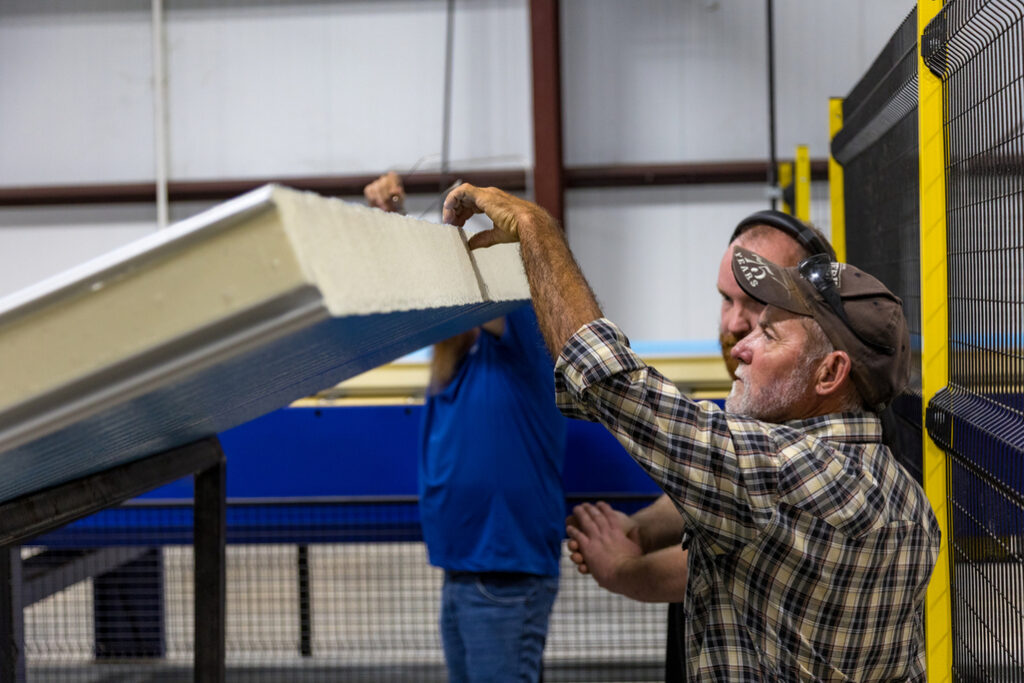
Not all insulated metal panel manufacturers are equal. Cold storage panels are a long-term infrastructure investment, and the manufacturer you choose affects panel quality, delivery reliability, technical support, and warranty coverage.
Key factors to evaluate:
| Factor | Insulated Metal Panels | Spray Foam |
|---|---|---|
| R-value consistency | Factory-controlled, uniform across the panel surface | Varies by application thickness and conditions |
| Vapor control | Integrated into the panel assembly | Requires separate detailing and field quality control |
| Installation speed | Faster — prefabricated panels install in large sections | Slower — requires multi-pass application and cure time |
| Quality control | Manufactured under factory conditions | Dependent on field application technique |
| Long-term performance | Dimensional stability that supports reliable thermal performance | Can shrink, crack, or degrade over time |
| Repairability | Individual panels can be replaced | Damaged areas require full reapplication |
For facilities requiring precise temperature control, the predictability and consistency of factory-manufactured insulated metal panels is a significant advantage over field-applied spray foam insulation.
For cold storage applications, reference PermaTherm’s PHF43 / PHF hidden fastener panel. This keeps the specification focused on current PolyIso products and the panel system PermaTherm is using for cold storage projects moving forward.
For cold storage warehouses maintaining temperatures between 0°F and 32°F, 6-inch panels delivering approximately R-48 are a common specification. Deep-freeze facilities operating at -20°F or below commonly use 8-inch panels (R-64). Walk-in coolers holding temperatures above 35°F can typically use 4-inch panels (R-32).
Properly installed PolyIso insulated metal panels can maintain reliable thermal performance for decades. Longevity depends on correct installation, connection integrity, and routine maintenance of sealants and closures.
Thermal bridging occurs when heat transfers through a conductive material that bypasses the insulation layer — usually at panel connections, structural fasteners, or penetrations. In cold storage, thermal bridging can cause condensation, ice buildup, and increased energy costs. Choosing panels with engineered connection technology is one way to help reduce that risk.
Lead times vary by project size and panel specifications. PermaTherm’s PRISM system accelerates the quoting and takeoff process, and factory-notched panels ship ready to install. Contact PermaTherm directly for current lead times and project scheduling.
Cold storage insulated metal panels require minimal maintenance. Inspect panel connections and sealants annually for signs of moisture infiltration, frost lines, or sealant degradation. Clean interior panel surfaces with approved cleaning agents per the coating manufacturer’s guidelines. Address any damage to metal facings promptly to prevent moisture from reaching the insulation core.
IMPs provide a consistent, factory-controlled R-value across the panel surface, include integrated vapor control, and install faster than spray foam assemblies. Spray foam R-value can vary based on application thickness and environmental conditions during installation. For cold storage facilities, the predictability of factory-manufactured panels is a significant advantage.
Choosing the right cold storage insulated metal panels is the most important decision in your cold storage construction project. The panel system you select determines energy efficiency, temperature stability, and long-term facility performance.
PermaTherm’s American-made PolyIso panels, PHF hidden fastener panel design, PermaShield technology, and PRISM quoting system are built to make cold storage panel specification clearer and more accurate.
Ready to spec your project? Get a quote from PermaTherm or call to schedule a consultation with a panel expert. Every project includes pre-project support, accurate PRISM takeoffs, and dedicated follow-through from order to installation.

